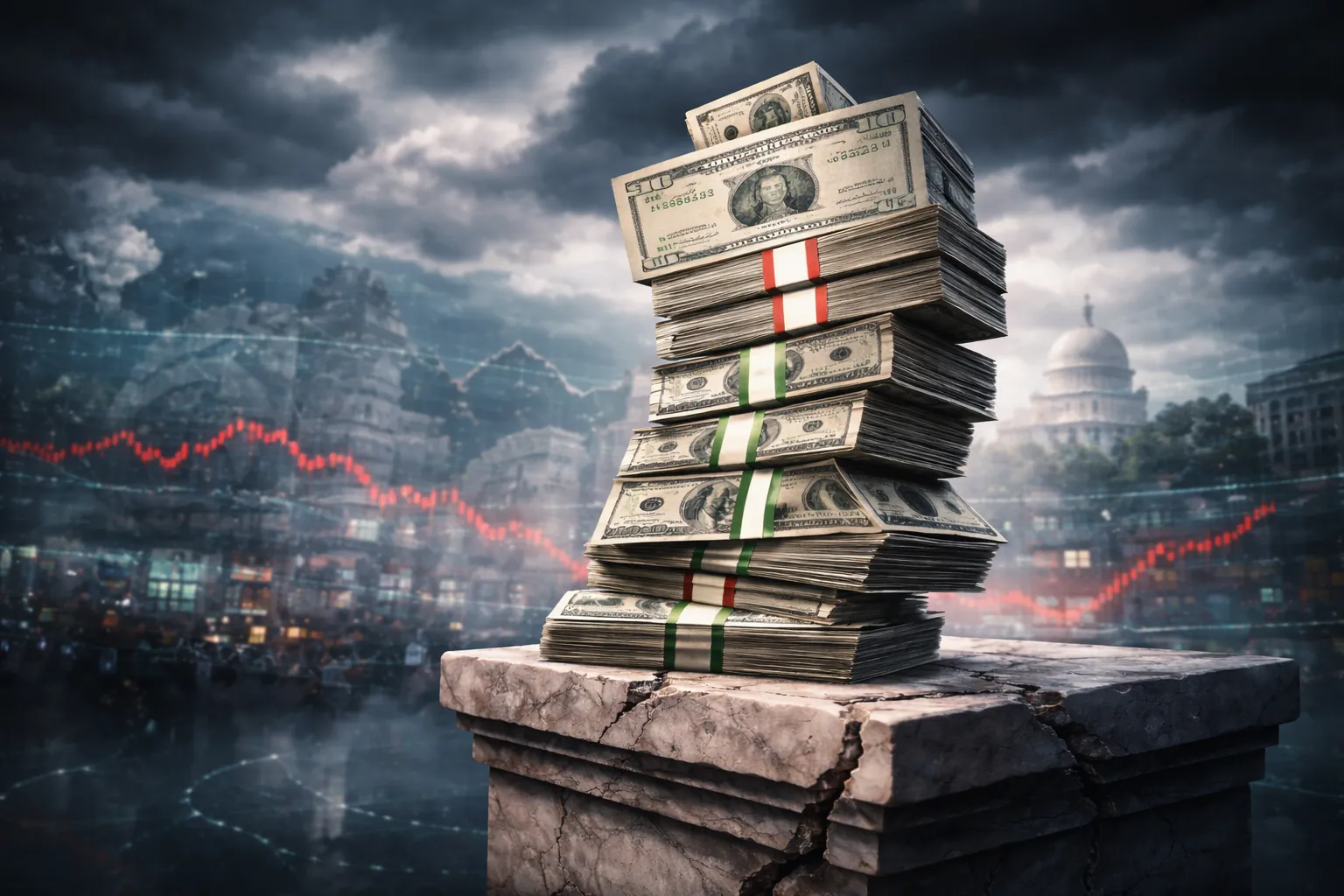
Confidence in US Treasury bonds seemed to waver for the second time since "Liberation Day." This time, it was because Donald Trump was getting more and more aggressive with his comments about Greenland. After a short time of chaos, the markets have settled down, and investors are back in a familiar position: anxiously waiting for the next episode in an administration that has made unpredictability its main trait.
A Year of Living in Danger
The list of reasons for investors to be careful with US assets has grown alarmingly long since Donald Trump's second term began on January 20, 2025. There is no sign that the budget deficits that keep growing will stop. Attacks on the Federal Reserve's independence have become common instead of rare. Trade wars, which were once just threats, are now real policies. And most recently, the administration's desire to annex Greenland, which is the sovereign territory of a NATO ally, has made relations between the US and Europe worse than they have been since the alliance was formed.
There have been times this year when people have clearly lost faith in US government bonds. The most shocking event happened in April 2025, after "Liberation Day," when Trump announced a huge set of tariffs that shook up financial markets around the world. The first announcement set off a coordinated sell-off across all asset classes, which forced the government to make an embarrassing tactical retreat by freezing the tariffs after seeing the damage they had caused in the market.
The Shock of Liberation Day and What Happened After
The market reacted quickly and strongly to Liberation Day. The S&P 500 index dropped about 15% in just a few days. Long-term US Treasury bonds, which are usually thought to be some of the safest investments in the world, were sold off quickly, which is bad news for the government. The US dollar, which usually gets stronger when there is global uncertainty because investors look for safe-haven assets, instead got a lot weaker. This is probably the most telling sign of all.
This three-way drop in stocks, bonds, and the dollar at the same time was something very unusual. During normal risk-off times, money flows into Treasuries and the dollar, even when stocks are going down. The fact that all three fell at the same time showed that investors weren't just avoiding risk in general; they were also rethinking how much they trusted US assets as a whole.
After the tariffs were put off, the stock markets made a quick comeback, as if they were ready to forgive and forget. But the episode showed how easily people lose faith in the market right now.
The Greenland Crisis: A Second Act
In the past few days, a similar pattern emerged when the Greenland controversy and problems in the Japanese government bond markets happened at the same time, causing US Treasury yields to rise sharply. Scott Bessent, the US Treasury Secretary, tried to say that the pressure was only caused by "waves" that started in Japan and then spread through international sovereign debt markets. This description is somewhat accurate; yields did go up in several developed economies during this time.
But this explanation conveniently leaves out an important problem. When there is financial trouble around the world, the dollar usually gets stronger because investors around the world want the safety of US assets. This time, the dollar fell because of stress in the market. This pattern strongly suggests that the problems with Treasuries were not just "imported" from other countries, but also caused by things happening in the US. In particular, they seemed to be linked to Trump's confrontational stance toward European allies over Greenland.
The diplomatic crisis was more than just a distraction. By openly threatening the territorial integrity of a NATO member, the administration raised important questions about how trustworthy US commitments are and how predictable US foreign policy is. For people outside the US who own US debt (which is worth trillions of dollars in Treasuries), these kinds of questions have direct financial effects.
The Punisher's Patience Paradox
Even though there have been times of high stress in the bond market, the so-called "punishers"—the vigilantes who are supposed to punish governments for being fiscally irresponsible by demanding higher yields—have been very patient with the Trump administration's unpredictable policies. Previous waves of panic have not lasted long, and most analysts agree that the total damage to how the Treasury market works has not been very bad.
Ten-year Treasury yields are high, but they haven't gone up to crisis levels and are still well below where they were when Trump took office a year ago. The term premium, which is the extra money investors want for holding longer-term bonds instead of short-term ones, does not show any signs of panic that would mean a loss of trust. The market has been very forgiving, even though political extremes that would have seemed impossible just a few years ago.
The dollar tells a similar tale. It seemed weaker for most of last year than short-term macroeconomic fundamentals would suggest, but it has since bounced back to levels that are more in line with standard valuation models. The feared drop in confidence hasn't happened yet, or at least not yet.
The Comparative Advantage of American Inefficiency
What makes this strong? One convincing answer comes from comparing the US to other major developed economies: no matter how much the US "sins" financially, it still looks pretty good.
Japan's debt-to-GDP ratio is over 260%, which makes American fiscal policy look almost smart in comparison. France is in what can only be called a simmering fiscal crisis, and political gridlock is making it impossible to make any real progress on fixing structural budget problems. Britain is stuck in a depressing cycle of low growth and high taxes, with no clear way to get back on track with either fiscal stability or new growth.
In this context, the United States still has a lot of advantages, even though it has a lot of debt. The economy keeps growing faster than most other developed countries. American demographics, though difficult, are not as dire as those confronting Europe or East Asia. Ironically, immigration is threatened by the very administration whose policies are being judged. Historically, immigration has given the US a demographic vitality that other rich countries don't have.
In addition to these basic factors, the size of the American economy and the dollar's special place in the global financial system make it harder for the market to keep people in line. The dollar is still the most important reserve currency in the world. It supports international trade and is the most common currency for issuing global debt. This structural position keeps the demand for dollar-denominated assets high, which keeps Treasury prices from falling even when people are very worried.
You should also think about the weight of history. For many years now, people have been warning about the US's unsustainable deficits. People who took them most seriously, by betting against Treasuries or the dollar, have often lost money. The market has learned, maybe dangerously, to ignore fiscal alarmism.
A Way to Look at It That Isn't as Comfortable
But there is a less comforting way to think about how stable the Treasury market is. Bonds usually do well when the economy slows down and the markets think interest rates will go down in the future. In these cases, older bonds with higher coupons are more appealing than new bonds, which helps keep prices high.
Yes, US economic growth has slowed down a lot in the last year, but it's still good by developed-world standards. The Trump administration's policies that slow down growth, like tariffs that make things more expensive for businesses and consumers, mass deportations that take workers out of the labor force, and policy uncertainty that makes people less likely to invest for the long term, are likely to be at least partly to blame for this slowdown.
This reading shows that a stable bond market doesn't mean people trust the government; it means that the government is hurting the economy's potential. The bonds are doing well because the economy is worse than it would be otherwise.
The Risk of Mispricing
It's still possible that the markets are wrong and haven't priced in the risks that come with current US policy well enough.
Investors are very good at figuring out how much to pay for small changes in growth and inflation expectations. Their models and gut feelings are set up for a world where established trends don't change much. The radical changes that Trump's policies could bring about are much harder for them to deal with.
The possibility of a real break in Fed independence, a full-blown trade war with important economic partners, mass deportations that have a big effect on labor markets, or a diplomatic break with NATO allies—these situations don't fit neatly into standard risk models. They are tail risks that are hard to measure and easy to ignore.
Recent history serves as a cautionary example. When inflation shot up in 2021 and 2022 for the first time in 40 years, financial markets were slow to realize how much the Federal Reserve would have to raise interest rates to deal with it. The adjustment that finally happened was painful for bond investors who had kept their positions based on a more stable inflation environment.
Waiting for the Punishers
Today's risk is similar, but it could be worse. The markets might not be taking into account how likely it is that something will happen that will require a major change in the price of US credit risk. If and when investors finally see the risks they have been ignoring, the change could happen quickly and cause problems.
The bond market "punishers" have been tested many times over the past year, and each time they have refused to impose serious discipline. But there are limits to patience. So far, Treasuries have been safe because other options are weaker, the dollar is structurally dominant, and people have learned to ignore fiscal concerns. However, these factors may not be enough if the administration keeps pushing the limits of what the market will accept.
The world is waiting for the next episode, hoping that each crisis will be as short-lived as the last. But repeated shocks have a cumulative effect that erodes the institutional credibility and policy predictability that are necessary for any sovereign's debt to be trusted. The punishers may be patient, but not forever. When they finally do something, the consequences could be quick, and the leniency that markets have shown toward American exceptionalism may have been borrowed time instead of a permanent gift.