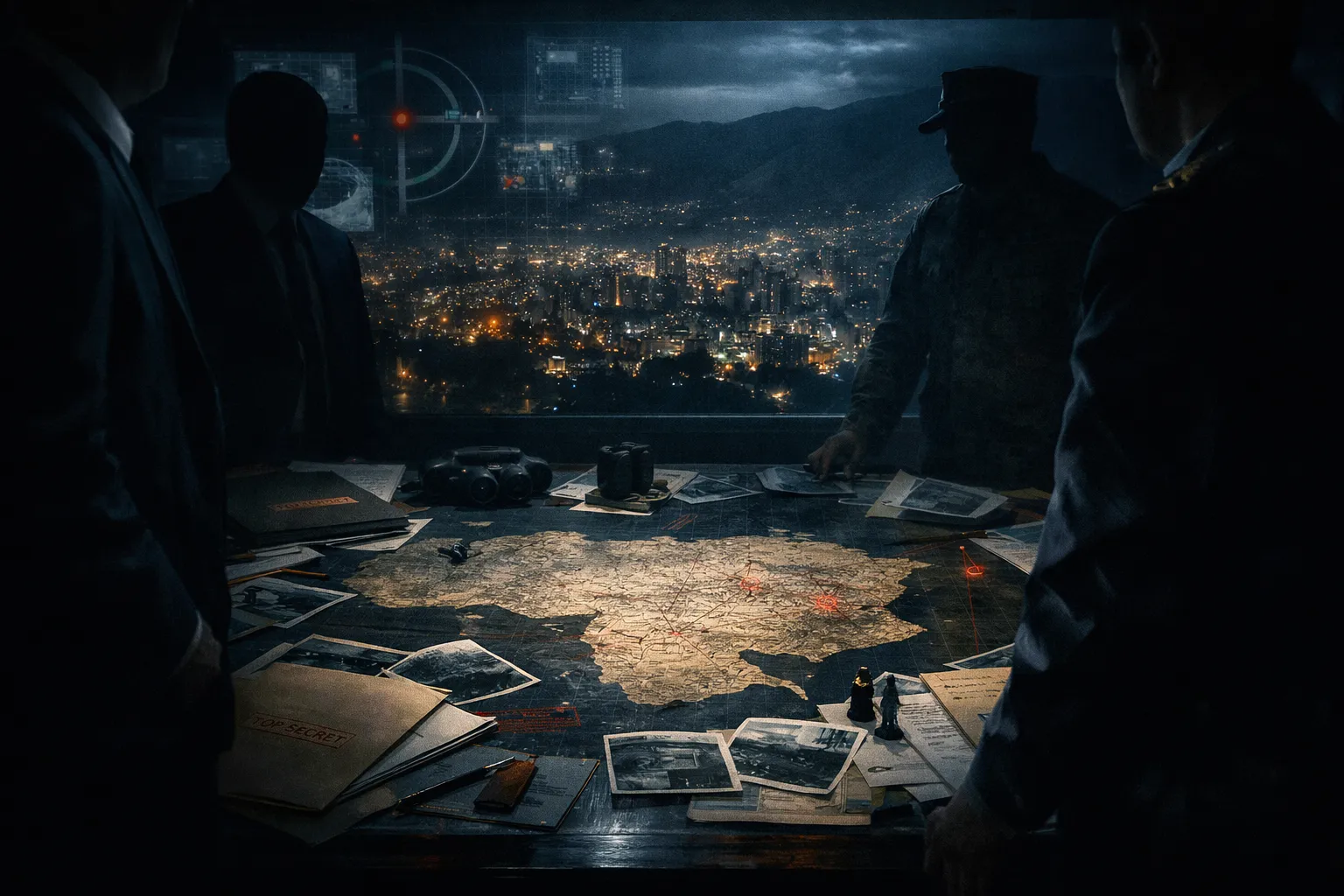
The Hidden Foundation of a Military Attack
According to several people who were briefed on the secret mission, a covert CIA team carried out acts of sabotage in Venezuela for months, setting the stage for the US military operation that ended with the arrest of Nicolás Maduro in early January.
The New York Times was the first to report the news, which shows how well the CIA and the Pentagon worked together to carry out what is, in effect, the biggest US intervention in Latin America in decades. More broadly, it shows that Washington is changing how it shows power in the Western Hemisphere. Instead of using diplomatic pressure campaigns like previous administrations did, it will focus on covert action and human intelligence.
A Big Change in the Agency's Goals
CIA Director John Ratcliffe gave congressional intelligence committees a closed-door briefing earlier this month in which he showed them numbers that show how big this strategic shift is. He told lawmakers that intelligence gathering in Latin America had gone up by about 51 percent while he was in office. The agency's network of human sources in the area grew by 61 percent, which is probably more important. This is a sign of the CIA's renewed focus on traditional tradecraft over signals intelligence and satellite surveillance.
The exact numbers are still secret, and the CIA won't say anything about the briefing or the operations in Venezuela. But the numbers match Ratcliffe's public vision of an agency that is willing to take more operational risk to protect American interests abroad.
A high-ranking US official wouldn't say what specific operations were going on in Venezuela, but they did say that CIA agents were helping the military mission as it happened. For months before the arrest, agency agents kept an eye on Maduro's movements and built relationships with people in Venezuela who could give them real-time information about the president's whereabouts, security arrangements, and daily routines. At the same time, they gave military leaders detailed reports on the situation on the ground, information that would be very important when US troops went into action.
Getting permission from the president and starting operations
After President Donald Trump gave the CIA the go-ahead to carry out secret operations in Venezuela, the pace of operations sped up. This decision removed bureaucratic barriers and gave the agency more freedom to act. Ten days before Maduro was arrested, CIA agents raided a dock where, according to US officials, gang members connected to the Venezuelan government were loading drugs onto boats that were going to international waters.
The pier operation had many uses. It messed up drug trafficking networks that Washington had long accused the Maduro government of protecting, if not directly controlling. It put Venezuela's security responses and communication protocols to the test. It also made it clear to some parts of Venezuela's military and intelligence that the US could and would act without fear of punishment on their territory.
The Intelligence Gap That Needed to Be Filled
The operation in Venezuela didn't just happen out of nowhere. Sources who know about internal discussions say that there had been growing concern at the Pentagon over the past year that American intelligence coverage of Venezuela and the rest of the Caribbean Basin had fallen to unacceptable levels. Allied nations, especially the UK, had better networks of sources and a better understanding of what was going on in the area.
This lack of intelligence had strategic consequences. Venezuela has the most proven oil reserves in the world. It has close ties with China, Russia, and Iran, three countries that Washington sees as strategic rivals or enemies. The long-lasting political and economic crisis in the country had caused a flow of refugees that made Colombia and Brazil, two important American partners, less stable. But after years of less presence and investment, the US intelligence community's ability to understand events in Venezuela, let alone change them, had gotten worse.
Ratcliffe came to CIA headquarters in Langley with the job of stopping this decline. He talked about how he wanted to bring back the agency's focus on collecting human intelligence and recruiting sources. These were the core skills that made the CIA what it was during the Cold War, but some critics said they had been ignored in favor of technological solutions. He also said he would be willing to do secret missions that other directors might have thought were too risky or politically charged.
Running Without a Safety Net
The most obvious sign that this aggressive stance had become public knowledge was that a CIA team was in Venezuela. It also showed how much risk the agency was ready to take.
The US cut off diplomatic ties with Venezuela in 2019, and its embassy in Caracas stayed closed. CIA agents working in the country couldn't count on the diplomatic immunity that usually protects intelligence officers who are sent abroad under official cover because there was no official representation. If they were caught, they would not have any legal status other than that of any other foreign national who was doing bad things against the Venezuelan government. They couldn't count on diplomats or prisoner exchanges to help them; all they could count on was a long prison sentence or worse.
This weakness necessitated extraordinary proficiency in trade. Officers had to do their jobs without the help that embassies give, like secure communication systems, safe houses protected by diplomatic immunity, and the administrative systems that keep long-term intelligence operations going. There was more risk with each move. Getting in touch with local sources could put the whole network in danger.
A Weird Acceptance of Publicity
It usually takes years, if not decades, for people to find out what the CIA did during military operations. Slowly, operational details come out through declassification processes, congressional investigations, or the memoirs of retired officials. The situation in Venezuela has gone in a very different direction.
President Trump has been very open about talking about what the agency does in public. He confirmed reports from last year that he had let the CIA do work in Venezuela. This was something that would have been very strange for any other president. In a later radio interview, he talked directly about how the port worked and shared information that would normally be kept secret.
There are several reasons why this is not the usual way of doing things. Trump has always tried to take credit for what he calls strong action against America's enemies. His administration was eager to make the successful arrest of Maduro known as a success in foreign policy. Also, the president's relationship with the intelligence community, which had been rocky during his first term, had changed a lot, and public praise for CIA operations helped to strengthen that relationship.
Military leaders know how important intelligence is.
General Dan Keane, Chairman of the Joint Chiefs of Staff, publicly thanked the intelligence community for their help after the operation. Keane, who was talking about ongoing operations, gave a lot of information about how intelligence agencies had been watching Maduro for a long time, being patient as they gathered information, getting the operational environment ready, and waiting for the right time to act.
This patience was very important. Maduro was very hard to get to because he changed his routines, lived in different places, and had layers of security made up of both Venezuelan military units and foreign advisers. It took a lot of intelligence gathering and careful analysis to find him with enough accuracy for a military strike, which is exactly what Ratcliffe had been working on rebuilding.
How Different Agencies Work Together
The operation in Venezuela needed more than just intelligence help; it needed real cooperation between agencies that have always done things differently and had different rights. The Times says that Ratcliffe met with Secretary of State Marco Rubio, Secretary of Defense Pete Hagood, and General Keane a lot over the summer and fall while Washington was working on its plan.
These meetings were more than just the usual meetings to plan things between agencies. They showed that there was a deliberate effort to make sure that military, diplomatic, and intelligence efforts worked together instead of against each other. Rubio knew a lot about Venezuela and had been friends with the opposition there for a long time. Hagood was in charge of the troops that would later make the arrest. Ratcliffe gave the whole business its brain. Keane made sure that military planning took into account the most recent intelligence reports and that operational commanders were aware of both the chances and the limits they faced.
What this means for U.S. strategy in the Western Hemisphere
The operation in Venezuela has effects that go far beyond what happens to Nicolás Maduro. It shows that the U.S. still has the ability and the political will to use force to intervene in Latin America when it sees important interests at stake. It sends a message to other governments in the area, especially those that have close ties with China or Russia, that Washington is ready to take strong action against threats it sees.
It is still unclear if this method will work in the long run. Military interventions in Latin America have a long history that affects the whole hemisphere. The memory of American support for coups, death squads, and authoritarian governments during the Cold War has not faded, and US actions that seem to echo that time could make people hate America even more, which is the opposite of what they want.
The operation also makes people wonder what the limits are for covert action. The CIA did sabotage and gathered intelligence in a country that was not at war with the United States. Maduro's government didn't have many supporters in Washington and didn't have much international legitimacy, but the precedent set by these kinds of operations could be bad if other countries used them against American interests.
A New Era in Secret Operations
The CIA's operation in Venezuela is both a return to what they used to do and a step into unknown territory. The agency was set up to do just this kind of work: getting information from people, carrying out secret missions to support American policy, and working closely with the military when necessary. For decades during the Cold War, the CIA's mission and the way it worked were shaped by these kinds of activities.
After 9/11, things became more important. The agency's main goal was to fight terrorism. Drone strikes took the place of old-fashioned secret missions. Some critics said that the CIA became an organization that was more comfortable with targeted killing than with slowly building up networks of spies.
It seems that Ratcliffe's time in office has changed the course. The Venezuela operation, which focused on human intelligence, long-term planning, and coordinated secret action, looks like an agency getting back to its original mission. Whether this is a temporary change or a permanent one will depend on a number of things that go beyond just one operation. These include the political sustainability of interventionist policies, the agency's ability to hire and train officers who can handle high-risk operational work, and the overall direction of American involvement in a region that Washington can no longer afford to ignore.